

The 10 Most Common Mistakes When Using Turbomolecular Vacuum Pumps and How to Avoid Them.
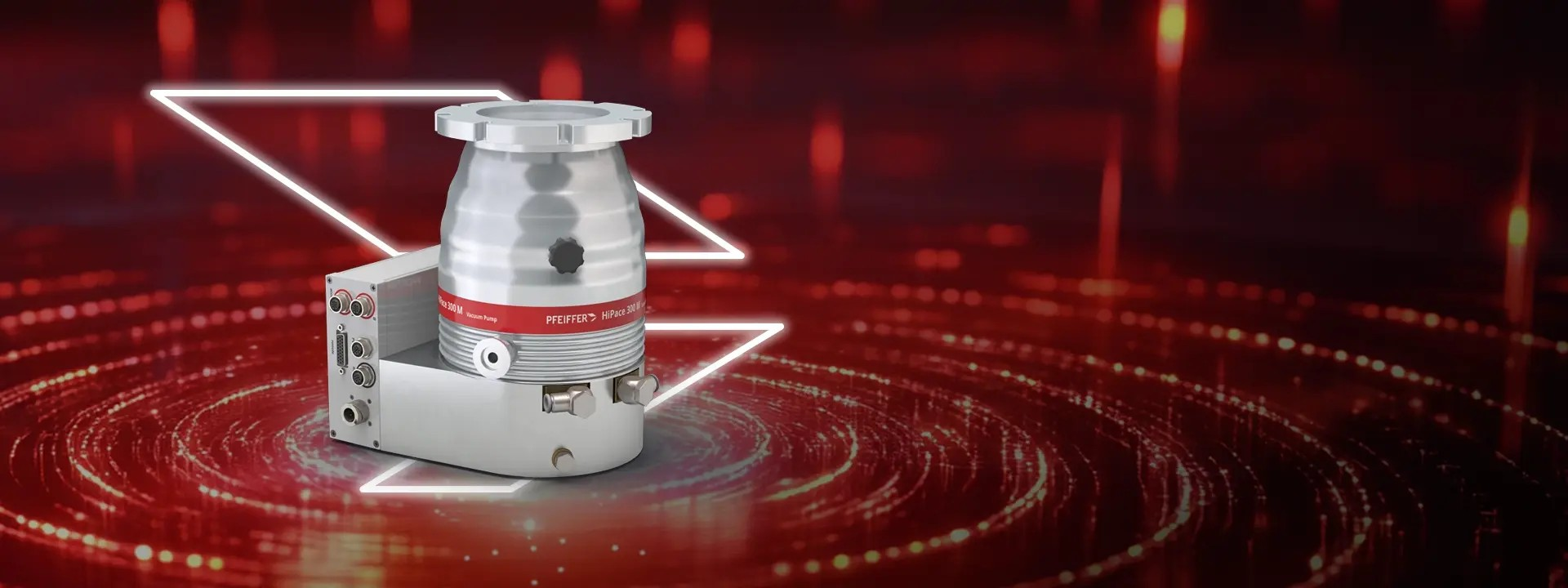
Source: Pfeiffer Vacuum+Fab Solutions
ASSLAR, GERMANY, February 13, 2026 /EINPresswire.com/ -- Turbomolecular vacuum pumps, also known as turbopumps, are at the heart of many high-tech processes – from semiconductor manufacturing to research laboratories. Yet even small mistakes in their setup or operation can lead to costly downtime, equipment damage, or complete vacuum pump failure. In this article, we will discuss the ten most common pitfalls and how to overcome them.
1. Incorrect dimensioning of high-vacuum lines
High vacuum lines and valves should be designed in accordance with the nominal pumping speed of the high vacuum pump. Otherwise, there will be considerable losses in the effective pumping speed due to unfavorable conductivity.
To illustrate the effect that an incorrectly designed high vacuum line can have, here is an example using a turbopump with a nominal pumping speed of 260 l/s, air as the pumped medium, and a vacuum line with a length of 250 mm:
If a vacuum line much smaller than the flange diameter of the turbopump (DN 100 (100 mm)) is used, the effective pumping speed will decrease. A DN 25 (25 mm) vacuum line will result in only around 7.4 l/s at the end of the line. By using the same diameter as the turbopump, the effective pumping speed will increase to 170 l/s.
Even a turbopump with a flange size of DN 320 (320 mm) and a nominal pumping speed of 3200 l/s would only offer approximately 7.6 l/s at the end of a DN 25 size vacuum line. This means that this turbomolecular vacuum pump, which is twelve times bigger than the vacuum pump in the first example in terms of nominal pumping speed, actually delivers virtually no additional benefit.
2. Rigid vacuum connections
Most applications require a rigid connection between the high vacuum flange of the turbopump and the chamber for safe, sustainable installation. However, in such cases, it is important to leave the forevacuum line connection or the lower end of the turbopump flexible. A rigid connection means that the vacuum pump housing cannot expand when exposed to heat. This will cause material stress, building up to impermissible levels that can eventually cause stress failures.
A rigid mounting method has further disadvantages: The rotor cannot oscillate freely and the existing minimum residual imbalance can lead to possible bearing failure and rotor damage over time.
3. Uncontrolled vibration from resonant frequencies
Turbomolecular vacuum pumps are balanced to ensure low vibration operation and optimal bearing life. During normal run-up, however, all turbopumps move through certain resonant frequencies. If these frequencies reach the resonant frequency of the vacuum chamber or the entire system, their amplitude increases significantly. This naturally occurring phenomenon causes the vacuum pump to vibrate and generate higher-than-usual sound levels. Although this effect in itself is normal and not the result of any problem with the turbopump, it is best to avoid the frequencies that trigger it to stop any damage from vibrations occurring. It is therefore advisable to determine the eigenfrequency of the system and discuss these values with the vacuum pump manufacturer to see how vibration can be avoided. This could be by means of reinforcements, such as vibration-damping mounts or pads between the vacuum pump and vacuum chamber, additional weights, changing the nominal speed of the turbopump, or design modifications.
4. Inadequate connections between inlet flange and vacuum chamber
Turbopumps store an enormous amount of mechanical energy, comparable to the energy of a turbopump free-falling from 300 m. In the event of a rotor crash, this energy is released in a matter of milliseconds and generates significant torque. Improper vacuum chamber design or incorrect attachment of the turbopump can result in deformation of the chamber and, in the worst case, twisting or even tearing of the turbopump from the flange.
Tests by turbopump manufacturers have revealed that the flange connection should ideally be designed in ISO-F. The turbopump is prevented from rotating in an ISO-F flange by its slotted holes and, for ISO-CF, by the fixing screw holes. Manufacturers offer mounting kits, which contain the appropriate number of clamps or fixing screws in the required material quality, as well as suitable centering rings. This is the only way to ensure that the connection remains intact and leak-tight in the event of a crash. The torque values can be found in the instruction manual for the turbopump and must be strictly observed.
5. Inadequate protection against foreign objects
Foreign objects falling into the turbopump rotor can cause irreparable damage. To prevent this, it is recommended to fit a splinter shield or protective screen in the inlet flange of the turbopump. While this will protect the vacuum pump from debris, it has the side effect of conductance loss. This causes the pumping speed to be reduced – by up to 30% depending on the gas type. Another solution is, if possible, to position the turbopump upside down on the chamber, as foreign objects will fall due to gravity. However, care must be taken to ensure that the vacuum pump is suitable for upside-down operation. If this type of installation is not possible, the vacuum pump can be mounted on a t-piece at an angle of 90° to the side. The backing port should face downwards.
6. Vacuum pump bake-out at excessive temperatures
In some applications, the system and turbopump must be conditioned to achieve optimal process parameters, including improved repeatability, reduced residual gas load, and higher vacuum pump efficiency. One means of conditioning is baking out. When baking out the turbopump, it is important to observe the maximum inlet flange temperatures that are specified by the manufacturer. These typically lie between 100 and 120 °C. Exceeding the permitted temperature will cause the vacuum pump to overheat and may result in damage to bearings or rotors. During bake-out, water cooling is mandatory. The bake-out period should be at least 6 hours.
7. Exceeding maximum permitted backing pressure
Turbopumps that have additional high compression stages alongside the turbo stages can handle backing pressures of over 30 hPa (mbar). However, pure turbo-stage vacuum pumps with just one turbomolecular compression stage can typically only tolerate 2-3 hPa (mbar). The limits differ according to the pumped medium. Exceeding these can overheat the rotor and the entire turbopump, leading to damage or even total failure due to excessive gas friction and insufficient heat dissipation.
A turbopump cannot operate against atmospheric pressure and therefore is always operated in combination with a backing pump at its exhaust. This vacuum pump – commonly a rotary vane vacuum pump or a dry vacuum pump – reduces the backing pressure from atmospheric to rough or medium vacuum. If this backing pump malfunctions and is not equipped with a high vacuum safety valve, the turbopump will back vent through the exhaust line. This can lead to contamination of the turbopump and attached system caused by oil particles from the backing pump. In addition, it can exert mechanical stress on the fast-spinning rotor. If a larger vacuum chamber is attached to the turbopump, air inrush through the exhaust line can cause the rotor to lift – a phenomenon called the “helicopter effect – and trigger a rotor crash. To prevent this, manufacturers offer safety valves, either integrated into the respective backing pumps or as separate solutions that isolate the turbopump and the chamber should a fault happen with the backing pump. These valves close within milliseconds in the event of failure and can be triggered by a pressure sensor or a vacuum pump failure signal.
8. Not, or incorrectly, venting the vacuum pump and system
Turbopumps generate very clean, hydrocarbon-free vacuum due to their superior compression and unique design properties. However, after shutdown of the turbopump or entire vacuum system, pressure equalization from the backing side to the high vacuum side can cause contaminants and oil particles to migrate back into the turbopump if precautions are not taken. If no valve or gate is installed on the high vacuum side, this contamination will continue into the equipment. One way to prevent this is by venting the turbopump with dry gas, such as nitrogen or oil-free air, creating a positive pressure gradient from the high vacuum side toward the backing side. This controlled gradient prevents contaminants from being pulled upstream during pressure equalization and also dilutes any residual vapors, reducing their partial pressures so they cannot migrate into the turbopump.
To further reduce the risk of contamination or even potential damage, a high vacuum safety valve to the backing pump is required to prevent air inrushes from the exhaust when the backing pump is stopped, as referenced in point 7. The drive electronics of the turbopump offer intelligent modes for safe venting at a particular speed in combination with the appropriate venting valve. Since the compression ratio of a turbopump also depends on the speed, the optimal moment to start venting is when the speed of the turbopump has dropped to approximately 50% of the nominal value. In unstable networks with frequent power failures, it is recommended to use what is known as a power failure venting valve, which automatically vents the vacuum pump and stops it properly in the event of a power failure.
9. Inadequate protection from magnetic fields, radiation and excessive heat sources
Magnetic fields generate eddy currents in the rotor of a running turbopump that work against its rotation. The energy this effect requires causes the motor to draw more current from its electrical connection. This can cause the rotor to overheat rapidly. The maximum permissible magnetic fields for the vacuum pump are specified in the instruction manuals in millitesla (mT). If these values are exceeded, the vacuum pump must be shielded with appropriate covers or, if the distribution of the magnetic field is known, arranged differently.
Neutron and gamma radiation of varying intensity and duration occur in particle accelerators. This radiation destroys power transistors, diodes, and electronic components which are typically essential elements of the drive electronics. To avoid this, the electronic components need to be removed from the affected area, requiring remote drive electronics to be installed at a safe distance from the radiation via a connecting cable.
Under vacuum conditions, heat is transferred predominantly via heat radiation. In cases where the application requires hot or very hot surfaces, such as in certain coating processes for wear protection, the rotor of the turbopump needs visual protection from these hot surfaces, such as a protective screen. Otherwise, this induced heat will not be sufficiently dissipated and can cause the rotor to overheat. Proper shielding is therefore required, as this can cause severe damage.
10. Failure to take precautions for the process
It is essential to select a turbopump suitable for the process and ensure it is properly prepared. For example, for corrosive processes – especially in the semiconductor industry – there are several precautions that should be taken to protect the turbopump.
A barrier gas, such as nitrogen, should be used to protect the motor and bearings. This creates a clean, positive-pressure seal between the process side of the pump and the sensitive internal components, which stops corrosive gases diffusing into the turbopump. However, the pressure of the barrier gas specified in the instruction manual must be adhered to. Furthermore, the additional gas load must be taken into account when designing the backing pump. Using the appropriate synthetic lubricant for turbopumps with ball bearings avoids oxidation. In addition, it is sensible to use corrosion-resistant materials such as nickel or ceramic coatings on the rotors.
Certain processes, such as chemical vapor deposition (CVD), are prone to deposits. These can lead to imbalance and vibrations or clogging due to condensation inside the vacuum pump which can cause malfunctions or even a rotor crash. If possible, the turbopump should be installed upside down so that dust cannot enter the vacuum pump as easily. It also makes sense to install a baffle plate to prevent dust from falling directly into the running vacuum pump. Modifying the turbopump with optional temperature management systems avoids or minimizes clogging and offers better uptime.
Conclusion
Avoiding the most common mistakes in the use of turbomolecular vacuum pumps is essential to ensure safe, efficient, and long-lasting operation. Many of these problems can be prevented simply by following the manufacturer’s recommendations, ensuring proper installation, and using suitable accessories. The ideal vacuum solution at the best price is almost always the focus from the customer’s point of view. However, this often carries the risk of selecting a sub-optimal vacuum pump setup for cost reasons, leading to higher downtime and higher maintenance expenses later. Choosing reliable turbopumps and appropriate accessories, combined with careful operation and monitoring, pays off over the long term. To ensure that the turbopump and its setup is fully suited for the process, a detailed consultation with the manufacturer is essential to confirm that the system can perform its task effectively – and for many years to come.
Dr Sandra Thirtle-Höck
Pfeiffer Vacuum+Fab Solutions
+49 6441 8021460
email us here
Visit us on social media:
LinkedIn
YouTube
Legal Disclaimer:
EIN Presswire provides this news content "as is" without warranty of any kind. We do not accept any responsibility or liability for the accuracy, content, images, videos, licenses, completeness, legality, or reliability of the information contained in this article. If you have any complaints or copyright issues related to this article, kindly contact the author above.
